Search engine optimisation is the single most important long-term marketing channel for any business with an online presence. It drives organic traffic, builds brand authority and generates leads without paying for every click. Yet despite its importance, SEO remains widely misunderstood. Some treat it as a dark art. Others reduce it to a handful of tricks. The reality sits somewhere in between: SEO is a structured, evolving discipline that rewards consistency, technical competence and genuine value creation.
This guide covers every major pillar of SEO, from how search engines work to the technical foundations of your site, from on-page optimisation to link building and beyond. Whether you are launching your first website or refining an existing strategy, this is your roadmap.
How Do Search Engines Actually Work?
Before you can optimise for search engines, you need to understand what they actually do. Google, Bing and other search engines perform three core functions: crawling, indexing and ranking.
Crawling is the discovery phase. Search engines deploy automated bots that follow links across the web to find new and updated pages. Every time a crawler lands on a page, it reads the content, follows outbound links and adds what it finds to a vast queue of discovered URLs.
Indexing is the storage phase. Once a page has been crawled, the search engine decides whether to store it in its index. Not every crawled page makes the cut. Pages with thin content, duplicate material or technical barriers like noindex tags may be excluded.
Ranking is the retrieval phase. When a user types a query, the search engine sifts through its index to find the most relevant results. It applies hundreds of ranking signals to determine the order in which pages appear. These signals include relevance, authority, page speed, mobile-friendliness and user experience, among many others.
Understanding this pipeline is foundational. If your pages cannot be crawled, they will never be indexed. If they are never indexed, they can never rank.
How Do You Do Keyword Research for SEO?
Keyword research is where every SEO campaign begins. It is the process of identifying the search terms your target audience uses when looking for products, services or information related to your business.
Effective keyword research requires an understanding of search intent, which is the reason behind a query. Intent generally falls into four categories.
Start by building a seed list of topics relevant to your business. Use tools like Google Keyword Planner, Ahrefs, SEMrush or Ubersuggest to expand that list with related terms, long-tail variations and question-based queries. Pay close attention to search volume, keyword difficulty and the types of pages currently ranking for each term.
Long-tail keywords deserve special attention. These are longer, more specific phrases that typically have lower search volume but higher conversion potential. A term like “best waterproof hiking boots for wide feet” may attract fewer searches than “hiking boots,” but the person typing it is far closer to making a purchase.
Group your keywords into clusters based on topic and intent. This clustering approach helps you plan content that targets multiple related terms on a single page rather than creating dozens of thin pages competing against each other, a problem known as keyword cannibalisation.
What Is On-Page SEO and Why Does It Matter?
On-page SEO refers to everything you can control directly on your website to improve its visibility. It covers content, HTML elements and site architecture.
How Should You Write Title Tags and Meta Descriptions?
The title tag is one of the strongest on-page ranking signals. It appears in the browser tab, in search results and when your page is shared on social media. Keep it under 60 characters, place your primary keyword near the front and make it compelling enough to earn a click.
Meta descriptions do not directly influence rankings, but they heavily impact click-through rate. Write a concise, persuasive summary of the page in under 155 characters. Include a call to action or a clear value proposition that differentiates your listing from competitors.
What Are Header Tags and How Do You Use Them?
Header tags (H1 through H6) provide structure to your content and help search engines understand the hierarchy of information on your page. Use a single H1 per page, typically matching or closely reflecting your title tag. Subheadings (H2, H3 and so on) should break the content into logical sections and naturally incorporate secondary keywords where appropriate.
How Important Is Content Quality and Depth for Rankings?
Content remains the backbone of SEO. Search engines reward pages that provide comprehensive, original and genuinely useful information. Thin content that barely scratches the surface of a topic will struggle to compete against in-depth resources that answer every related question a user might have.
Write for your audience first. Address their pain points, answer their questions and provide actionable advice. Use clear language and avoid jargon unless your audience expects it. Format your content for readability with short paragraphs, descriptive subheadings and visual elements like images or tables where they add value.
Google’s Helpful Content system, introduced in 2022 and continually refined, explicitly targets content written primarily for search engines rather than people. The message is clear: create content that demonstrates first-hand experience, expertise, authority and trust.
Why Is Internal Linking Important for SEO?
Internal links connect pages within your own site. They help search engines discover new pages, understand your site’s structure and distribute authority across your domain.
Link from high-authority pages to important but less visible ones. Use descriptive anchor text that tells both users and search engines what the target page is about. Avoid generic phrases like “click here” or “read more.” A well-planned internal linking strategy acts as a roadmap for crawlers and keeps users engaged deeper within your site.
How Do You Optimise Images for Search Engines?
Images contribute to user experience and can drive traffic through image search. Optimise every image by compressing file sizes for fast loading, using descriptive file names and writing meaningful alt text. Alt text serves two purposes: it describes the image for users with screen readers and gives search engines context about visual content.
What Is Technical SEO and What Does It Cover?
Technical SEO covers the behind-the-scenes elements that enable search engines to crawl, index and render your site efficiently. Without a solid technical foundation, even the best content can underperform.
How Does Site Speed Affect SEO Performance?
Page speed is a confirmed ranking factor and a critical component of user experience. Slow pages frustrate users and increase bounce rates. Use tools like Google PageSpeed Insights, Lighthouse or GTmetrix to identify bottlenecks.
Common fixes include compressing images, minifying CSS and JavaScript, leveraging browser caching, using a content delivery network (CDN) and reducing server response times. Core Web Vitals, a set of metrics measuring loading performance, interactivity and visual stability, have become increasingly important in Google’s ranking systems.
Why Is Mobile-Friendliness a Ranking Factor?
Google uses mobile-first indexing, meaning it predominantly uses the mobile version of your site for indexing and ranking. If your site does not perform well on mobile devices, it will struggle in search results regardless of how good the desktop experience is.
Ensure your site uses responsive design, that buttons and links are easily tappable, that text is readable without zooming and that content is not hidden behind interstitials or pop-ups that obstruct the mobile experience.
How Do You Ensure Your Site Is Crawlable and Indexable?
Your robots.txt file tells crawlers which areas of your site they can and cannot access. Your XML sitemap provides a structured list of URLs you want indexed. Together, these files guide search engines through your site efficiently.
Check for crawl errors regularly using Google Search Console. Look for pages returning 404 errors, redirect chains or loops and server errors that prevent crawling. Ensure important pages are not accidentally blocked by robots.txt rules or noindex tags.
What Is Structured Data and How Does It Help SEO?
Structured data, implemented through schema markup, helps search engines understand the context and meaning of your content. It can trigger rich results in search, such as star ratings, FAQ dropdowns, recipe cards and event listings.
Use JSON-LD format to implement schema on your pages. Common types include Article, Product, LocalBusiness, FAQ and HowTo. Google’s Rich Results Test tool lets you validate your markup before deployment.
Does HTTPS and Site Security Affect Rankings?
HTTPS is a baseline ranking signal. If your site still runs on HTTP, migrating to HTTPS is one of the simplest and most impactful technical improvements you can make. Beyond rankings, users trust secure sites more and browsers actively warn visitors about insecure connections.
What Are Canonical Tags and When Should You Use Them?
Canonical tags tell search engines which version of a page is the “master” copy when duplicate or near-duplicate content exists. This is common on e-commerce sites where the same product might appear under multiple category URLs. Proper use of canonical tags consolidates ranking signals and prevents dilution across duplicate pages.
What Is Off-Page SEO and How Do You Build Backlinks?
Off-page SEO encompasses everything that happens outside your website to influence your rankings. The most significant off-page factor is backlinks: links from other websites pointing to yours.
Why Do Backlinks Matter for SEO?
Search engines treat backlinks as votes of confidence. When a reputable site links to your content, it signals that your page is trustworthy and valuable. Not all links are equal, though. A single link from a high-authority, relevant domain carries far more weight than dozens of links from low-quality or unrelated sites.
What Are the Best Ways to Build Links in 2026?
Link building requires patience and creativity. The most sustainable approaches focus on earning links rather than manufacturing them.
Create content worth linking to. Original research, comprehensive guides, unique data visualisations and expert commentary naturally attract links because they provide genuine value that other content creators want to reference.
Digital PR involves pitching stories, data or expert insights to journalists and publishers. When your brand is featured in news articles or industry publications, the resulting links carry significant authority.
Guest posting, when done thoughtfully, can build relationships and earn contextual links from relevant sites. The key is to contribute genuinely useful content to reputable publications rather than churning out low-quality articles purely for link placement.
Broken link building involves finding dead links on other sites and suggesting your content as a replacement. Resource page link building targets curated lists of useful links within your niche. Both strategies provide value to the linking site while earning you a backlink.
What Link Building Tactics Should You Avoid?
Buying links, participating in link schemes and using private blog networks are all violations of Google’s spam policies. These tactics may produce short-term gains but carry serious risks, including manual penalties that can remove your site from search results entirely.
How Do You Optimise for Local SEO?
For businesses that serve a specific geographic area, local SEO is essential. It determines whether your business appears in the local pack, Google Maps results and location-based searches.
Claim and optimise your Google Business Profile. Ensure your business name, address and phone number are accurate and consistent across every online directory and citation. Encourage satisfied customers to leave reviews and respond to every review, positive or negative, with professionalism.
Build local citations on relevant directories and industry-specific platforms. Create location-specific content that addresses the needs and interests of your local audience. If you serve multiple locations, develop dedicated landing pages for each area with unique, locally relevant content.
How Do You Build a Content Strategy for SEO?
SEO without a content strategy is a ship without a rudder. Your content strategy should align keyword research with business goals and map content to every stage of the customer journey.
Develop a content calendar that ensures regular publication and covers a balanced mix of content types. Audit existing content periodically to update outdated information, consolidate thin pages and refresh underperforming articles. A single well-maintained page that comprehensively covers a topic will almost always outperform multiple weak pages competing for the same keywords.
How Do You Measure and Track SEO Performance?
You cannot improve what you do not measure. Effective SEO requires ongoing tracking and analysis.
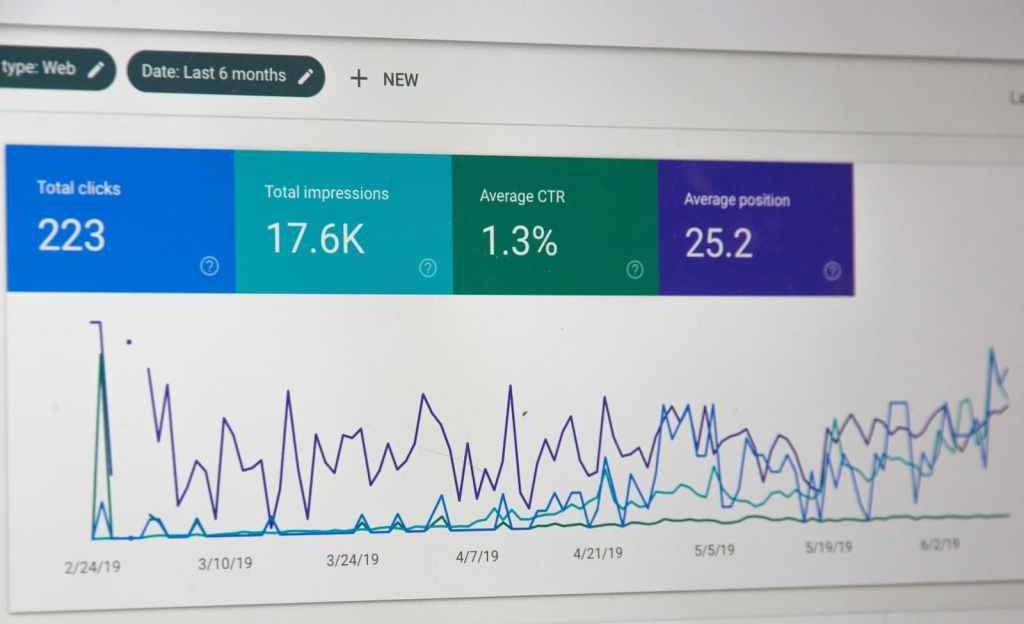
Google Search Console is your primary tool for understanding how Google sees your site. It reveals which queries drive impressions and clicks, which pages are indexed, any crawl errors or manual actions and your Core Web Vitals performance.
Google Analytics (or a privacy-focused alternative) tracks user behaviour on your site: traffic sources, engagement metrics, conversion rates and more. Connect your analytics to specific business goals so you can measure the actual impact of organic traffic on revenue.
Track keyword rankings over time to monitor progress, but do not obsess over individual positions. Rankings fluctuate daily and vary by location and device. Focus instead on broader trends in organic visibility and traffic growth.
Monitor your backlink profile using tools like Ahrefs or SEMrush. Watch for toxic links that could harm your site, track new links earned and analyse competitors’ link-building activities for opportunities.
What Does the Future of SEO Look Like?
SEO is not static. It evolves with search engine algorithms, user behaviour and technology. Several trends are shaping the future of the discipline.
AI and large language models are transforming how search results are presented. Google’s AI Overviews and other generative search features are changing the traditional ten blue links format. Optimising for AI-driven search, sometimes called Generative Engine Optimisation or GEO, involves ensuring your content is structured, authoritative and clearly cited by AI systems.
Voice search continues to grow as smart speakers and voice assistants become more prevalent. Voice queries tend to be longer and more conversational, reinforcing the importance of natural language content and featured snippet optimisation.
User experience signals are becoming more prominent in rankings. Core Web Vitals, page experience and overall site usability are no longer optional considerations. They are ranking factors that directly influence visibility.
E-E-A-T (Experience, Expertise, Authoritativeness and Trustworthiness) is not a ranking factor in the algorithmic sense, but it reflects the qualities Google’s quality raters look for when evaluating content. Demonstrating real-world experience and deep expertise in your subject area builds the kind of trust that search engines increasingly reward.
How Do You Bring Your SEO Strategy Together?
SEO is not a single tactic. It is a coordinated effort across technical foundations, content creation, on-page optimisation and off-page authority building. No single element works in isolation. A technically flawless site with no content will not rank. Exceptional content on a broken site will not perform. A strong backlink profile pointing to thin, irrelevant pages will not convert.
The businesses that win at SEO are the ones that commit to it as a long-term discipline rather than a short-term project. They invest in understanding their audience, creating genuinely valuable content, maintaining technical excellence and building authentic relationships that earn links and mentions organically.
Start with the fundamentals. Nail your technical SEO, conduct thorough keyword research, create content that serves your audience and build authority through quality and consistency. The results will not come overnight, but they will compound over time into a sustainable, high-performing organic presence that no paid channel can replicate.


Leave a comment